Iran from Heidegger to Kant: Žižek on War, Sovereignty, and Philosophical Power
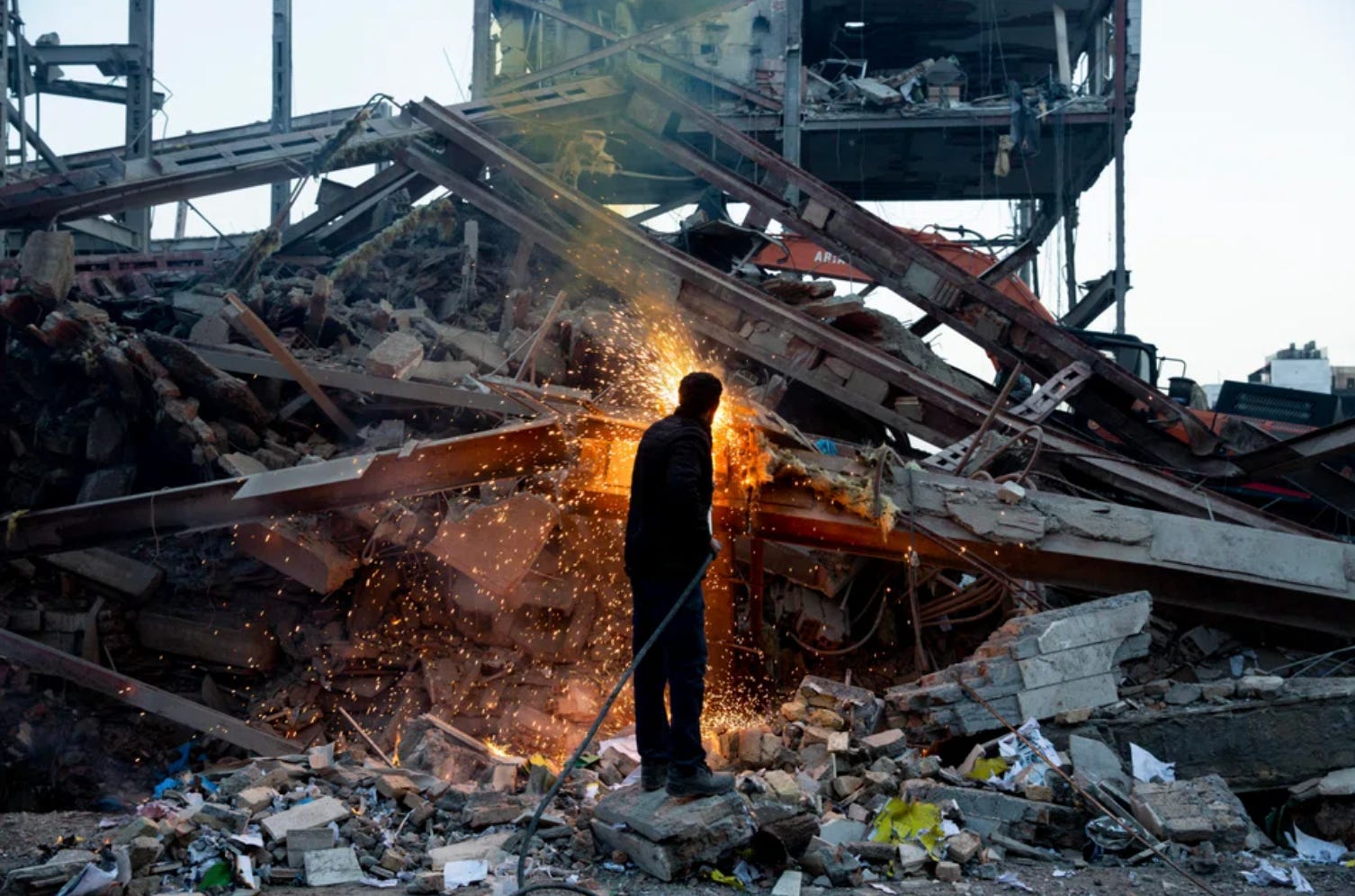
In this essay, Slavoj Žižek comments on the 2026 conflict involving Iran, the United States, and Israel while revisiting earlier positions on Iranian nuclear arms. He contrasts his current view with his 2005 argument, then focuses on the 2022 Mahsa Amini protests as a politically and historically significant uprising that linked women’s liberation, resistance to religious repression, and demands for freedom. Žižek argues that Iran’s current situation must be understood alongside the country’s internal political tensions and the role of intellectual traditions in shaping power. He discusses figures such as Seyyed Ahmad Fardid, Mohammad Khatami, Ali Larijani, and Ayatollah Khamenei, tracing how ideas from Heidegger, Habermas, and especially Kant have been mobilized in Iranian political discourse. He also uses Kantian ethics to reject attempts to excuse violence by appealing to duty or obedience. The essay ultimately presents Iran as caught between an oppressive regime and external military pressure, while also broadening the argument into a critique of sovereignty violations, Western Europe’s alignment with the US, and the political misuse of philosophy.
From earlier nuclear arguments to a changed position
Žižek says he no longer holds the view he expressed in 2005 about Iranian nuclear arms. He frames that earlier position in the context of Western complicity in the Iran-Iraq War and then turns to the present conflict to explain why his stance has changed.
Mahsa Amini protests and political meaning
He presents the 2022 Mahsa Amini protests as a world-historical event. In his account, they united struggles against women’s oppression, religious oppression, and state terror, and were not simply comparable to Western feminist movements.
Opposition to both the Iranian regime and foreign attacks
Žižek condemns the Iranian clerical regime and also rejects the US-Israeli attacks on Iran. He argues that a regime change imposed from outside would be the wrong kind of change and that the issue is tied to broader questions of sovereignty.
Heidegger, Fardid, and the critique of the West
The essay traces the influence of Heidegger on Seyyed Ahmad Fardid, who helped shape an ideological critique of Western rationalism and coined the term ‘Westoxication.’ Žižek uses this to show how philosophical ideas became embedded in post-revolutionary Iranian politics.
Khatami, Habermas, and failed reform
Žižek briefly recalls Mohammad Khatami’s reformist presidency and his promotion of ‘Dialogue Among Civilizations,’ linked to Habermas’s theories of communicative action. He notes that this liberal-reformist moment was later suppressed and lost momentum.
Kant, duty, and authoritarian misuse
A major part of the essay examines whether Kant’s ethics can be misread as supporting authoritarian obedience. Žižek argues that Kantian autonomy makes the individual fully responsible for defining duty and rejects any excuse based on merely ‘following orders.’
Key takeaways
- Žižek says his earlier position on Iranian nuclear arms no longer stands.
- He treats the Mahsa Amini protests as a major political turning point.
- He opposes both the Iranian regime and US-Israeli military action.
- The essay links Iranian politics to Heidegger, Habermas, and Kant.
- Žižek argues that Kantian duty cannot be used to justify obedience or violence.
Source: Slavoj Žižek, “IRAN FROM HEIDEGGER TO KANT,” published on Substack on 2026-03-18. Read the original at https://slavoj.substack.com/p/iran-from-heidegger-to-kant-da4 Read the original post on Substack.