In the Court of the AI King: Žižek on AI, Superego, and the “Crimson King”
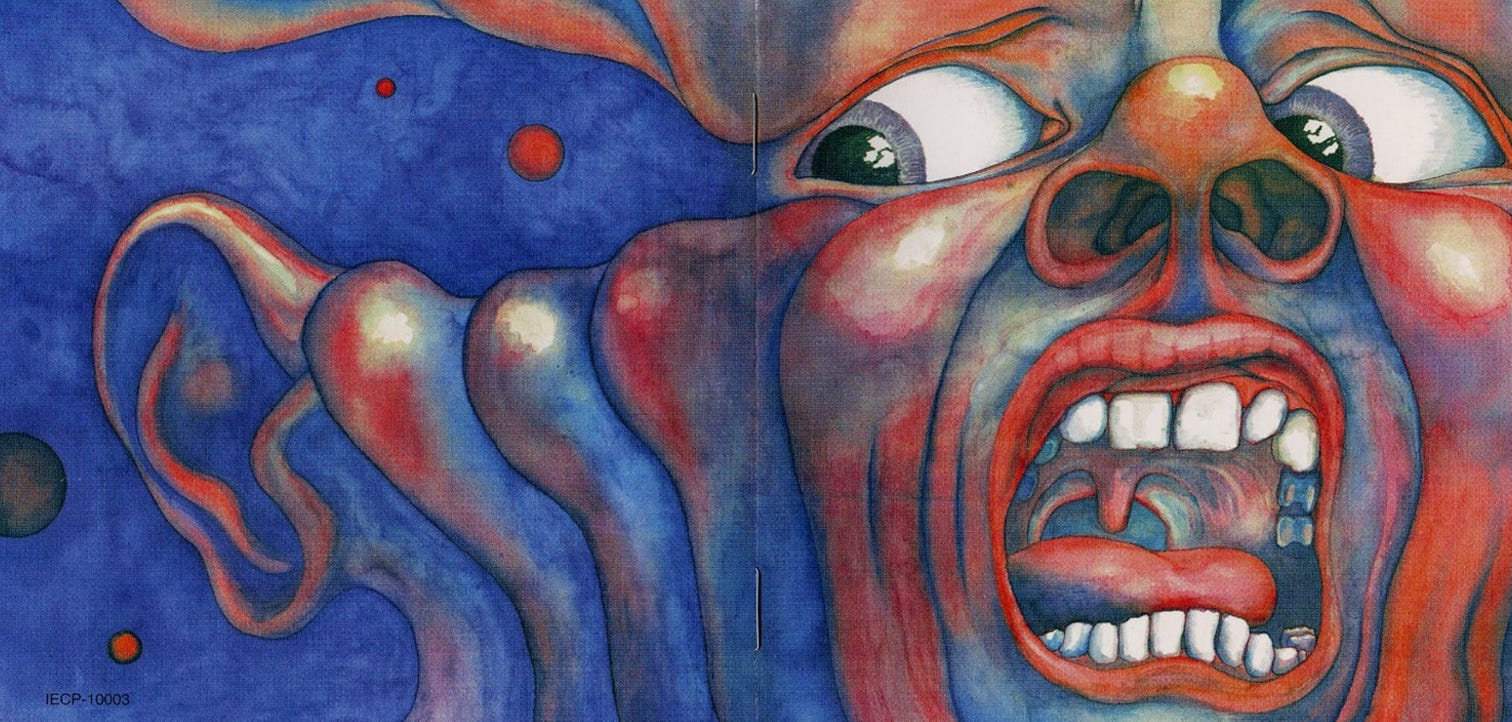
In this essay, Slavoj Žižek uses the cover art of King Crimson’s In the Court of the Crimson King as a starting point for a broader argument about AI, authority, and subjectivity. He connects the album’s screaming and smiling figures to the experience of being dominated by AI systems, then contrasts Satan as accuser with the Holy Spirit as a kind of advocate or helper. From there, he explores debt, the abolition of guilt, and the idea that digital systems can feel like a new kind of spiritual or supervisory power. Žižek then turns to populism, the “serving” master, and the obscene authority figure, before arguing that AI is experienced by users as a maternal superego that demands constant engagement and enjoyment.
Album art as a metaphor for AI domination
Žižek begins with the two images from King Crimson’s 1969 album and reads them as symbols of the human subject caught under AI control. The screaming face suggests horror and awakening, while the smiling Crimson King hides violence behind a calm exterior.
Satan, the Holy Spirit, and the language of court
He frames Satan as an accuser and prosecutor, while the Holy Spirit functions like a defender or counselor. In this court-like structure, spiritual forces are reimagined as roles in a legal struggle over accusation, guilt, and protection.
Debt, sacrifice, and freedom from guilt
Žižek contrasts a Catholic reading of sacrifice and debt with a Protestant reading in which Christ’s death abolishes the entire debt structure. In this view, the Holy Spirit becomes the name for a community no longer defined by constitutive guilt.
AI as a digital big Other
The essay then shifts to contemporary AI tools and brain-computer interfaces. Žižek suggests that the real danger is not only what AI says, but how it organizes human dependence, authority, and control at a structural level.
Populism, the obscene master, and the maternal superego
He argues that modern authority often disguises itself as service to the people, while in reality operating through fantasy and manipulation. AI, in his view, becomes a form of superego pressure: not just a tool, but a presence that urges users to keep going, keep asking, and never stop.
Key takeaways
- Žižek uses King Crimson’s album art as a metaphor for AI domination and the struggle for subjectivity.
- He reworks religious concepts like Satan, the Holy Spirit, and debt to explain modern digital authority.
- The essay warns that AI can function like a superego: seductive, demanding, and hard to resist.
- Populist and technological power alike may present themselves as servants while exercising control.
- The route out, Žižek argues, is to break the fantasy of protective mastery and recover the subject.
Source: Slavoj Žižek, “IN THE COURT OF THE AI KING” (Substack, published 2026-07-08). Read the original at https://slavoj.substack.com/p/in-the-court-of-the-ai-king-4b2 Read the original post on Substack.