Why “Sarajevo Safari” Shows the Perversion of Violence at a Safe Distance
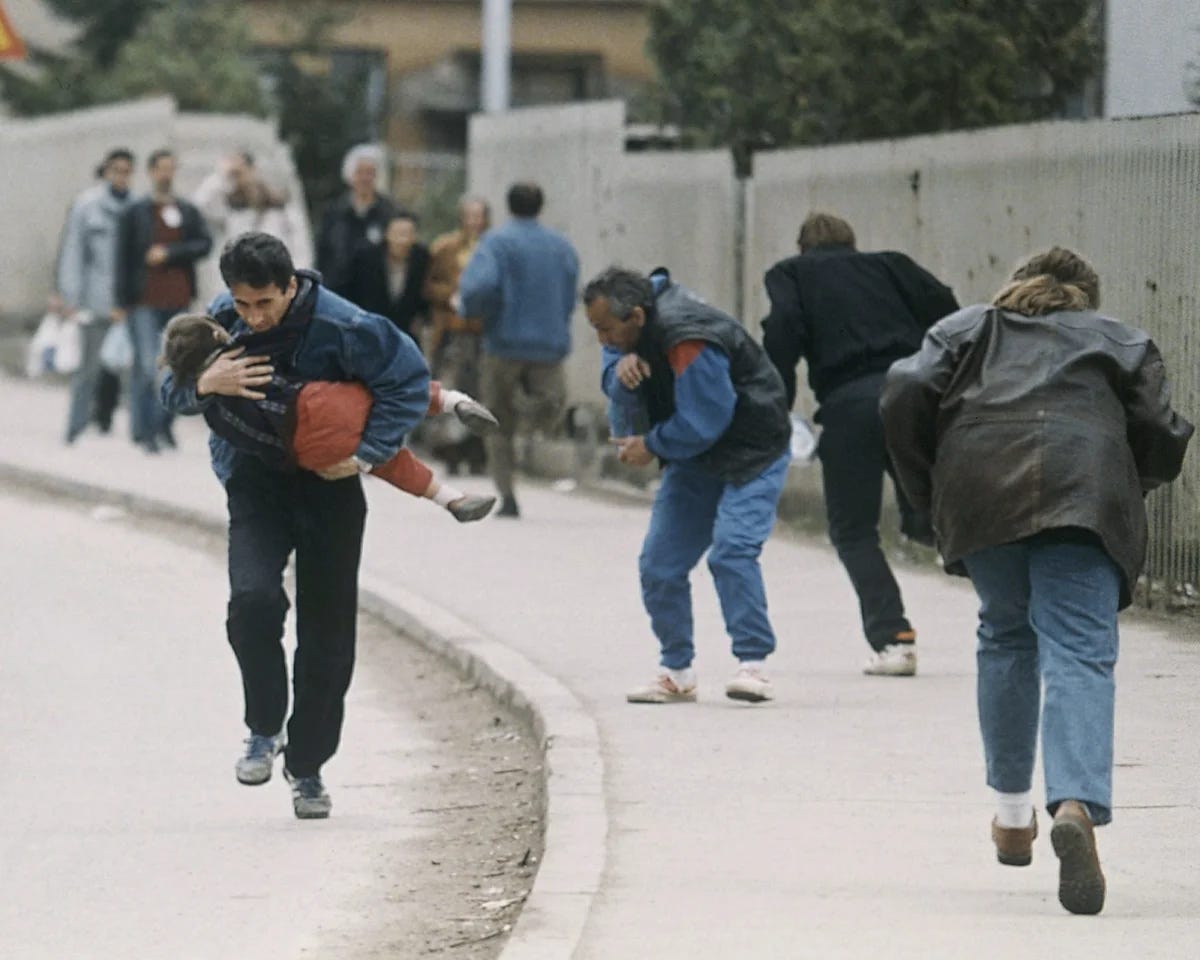
In this piece, Slavoj Žižek uses the documentary Sarajevo Safari as a lens to examine a disturbing form of violence: people excluding themselves from social reality and acting from a protected distance. He argues that the alleged “safari” killings in besieged Sarajevo reveal not only the brutality of the siege, but also a perverse subjectivity in which the hunter is shielded from shame and accountability. The article also raises questions about what was known by military and peacekeeping authorities, and why no decisive action was taken.
The “safari” as a disturbing form of detachment
Žižek frames the Sarajevo Safari allegations as an extreme example of modern perversion: acting from outside social reality so that one’s actions are not exposed to shame or judgment.
What the documentary alleges
The article describes claims that rich foreign visitors paid to be transported to sniper positions overlooking Sarajevo during the siege, where they could shoot at civilians for a fee. The text says the Bosnian Serb Army organized the trips and that prices reportedly varied, including higher fees for killing children.
Questions about awareness and silence
Žižek notes that the documentary suggests both Bosnian Serb command and NATO peacekeepers were aware of the practice, and he asks why it was not publicly exposed or stopped more forcefully.
The psychology of the “hunter”
The central concern is not only the victims’ anonymity, but the hunter’s self-exclusion from ordinary reality. Žižek argues that the thrill came from being able to treat real human beings as part of a spectacle while pretending to stand safely above the real world.
Key takeaways
- Žižek presents Sarajevo Safari as an example of violence enabled by emotional and symbolic distance.
- The article says wealthy foreigners allegedly paid to shoot at civilians during the siege of Sarajevo.
- The piece emphasizes the dehumanizing logic of anonymity and the spectacle of detached killing.
- Žižek questions why knowledge of the alleged practice did not lead to stronger public action.
Source: Slavoj Žižek, “WHEN KILLING HUMANS BECOMES A SAFARI,” published July 18, 2026, at https://slavoj.substack.com/p/when-killing-humans-becomes-a-safari Read the original post on Substack.