Slavoj Žižek on Nolan’s Odyssey: A Chamber Drama of Lies, Violence, and Civilizational Change
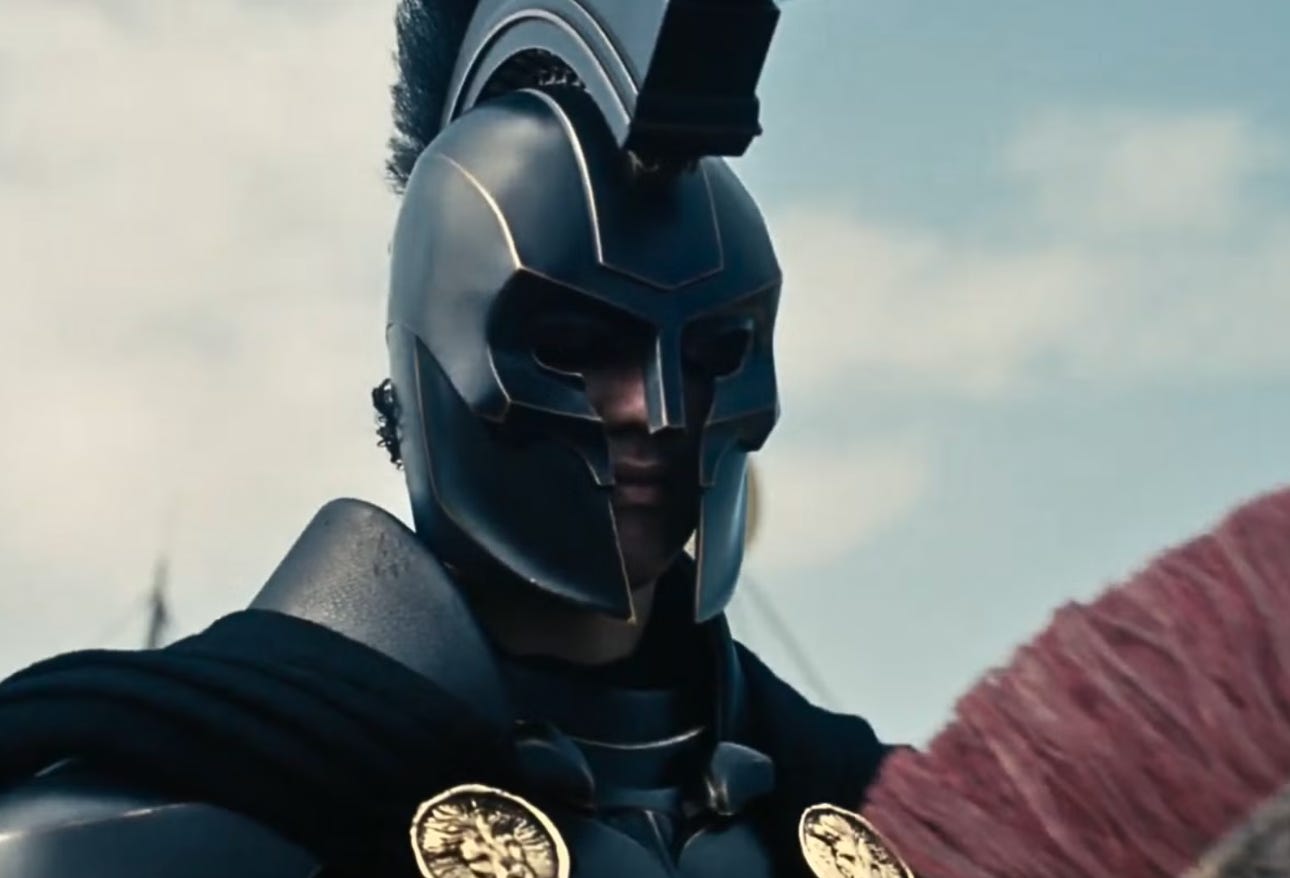
In this essay, Slavoj Žižek argues that Christopher Nolan’s Odyssey is less a giant spectacle than a tightly scaled chamber drama. He reads the film as a work that strips epic conflict down to claustrophobic spaces, ordinary brutality, and the hidden costs of heroic myth. From the Trojan horse to Odysseus’s manipulations, Žižek treats the story as a meditation on lies, violence, and the founding crimes behind civilization. He also connects the film to contemporary anxieties about AI, post-truth culture, and the uncertain transition into a new historical era.
Odyssey as chamber drama rather than pure spectacle
Žižek’s first claim is that the movie’s power lies in its restraint. Instead of emphasizing mass battles and monumental scale, the film often feels intimate, compressed, and almost low-budget in its feel. He sees this not as a flaw but as part of its strength.
Women, desexualization, and the rebalancing of the epic
The essay notes that The Odyssey gives more attention to women’s inner lives than The Iliad, and Žižek says Nolan pushes this further by filming female characters in a way that avoids conventional glamour or erotic framing. He highlights Circe as especially important in this reinterpretation.
The Trojan horse and the material reality of heroism
Žižek points to the Trojan horse as a key example of the film’s approach: it exposes the dirty, cramped, bodily reality behind epic achievement. For him, the movie reveals what heroic narratives usually hide—hunger, fear, deception, and degradation.
Odysseus, lying, and the birth of a new order
The essay reads Odysseus as a figure whose lies are not just tactical but historically symbolic. Žižek suggests that the film stages the end of one heroic world and the rise of another, built on deception and founding violence rather than noble honor.
From ancient transition to modern crisis
Žižek extends the film’s themes to the present, linking the end of the Bronze Age in the story to today’s sense of civilizational transition. He connects that to AI and post-truth culture, arguing that the future may hold either a higher civilization or a new barbarism.
Key takeaways
- Žižek reads Nolan’s Odyssey as an intimate chamber drama, not only a spectacle.
- He emphasizes the film’s focus on hidden violence, bodily degradation, and deception.
- The essay treats Odysseus’s lies as foundational to a new civilization.
- Women in the film are framed as less ornamental and more fully present.
- Žižek connects the movie’s historical transition to contemporary fears about AI and post-truth.
Source: Slavoj Žižek, “THE ODYSSEY: FINALLY A GOOD CHAMBER DRAMA,” Substack, published 2026-08-04. https://slavoj.substack.com/p/the-odyssey-finally-a-good-chamber Read the original post on Substack.