From Gnosticism to Divine Kenosis: Lacan, Tarkovsky, Hegel, and the Limits of Meaning
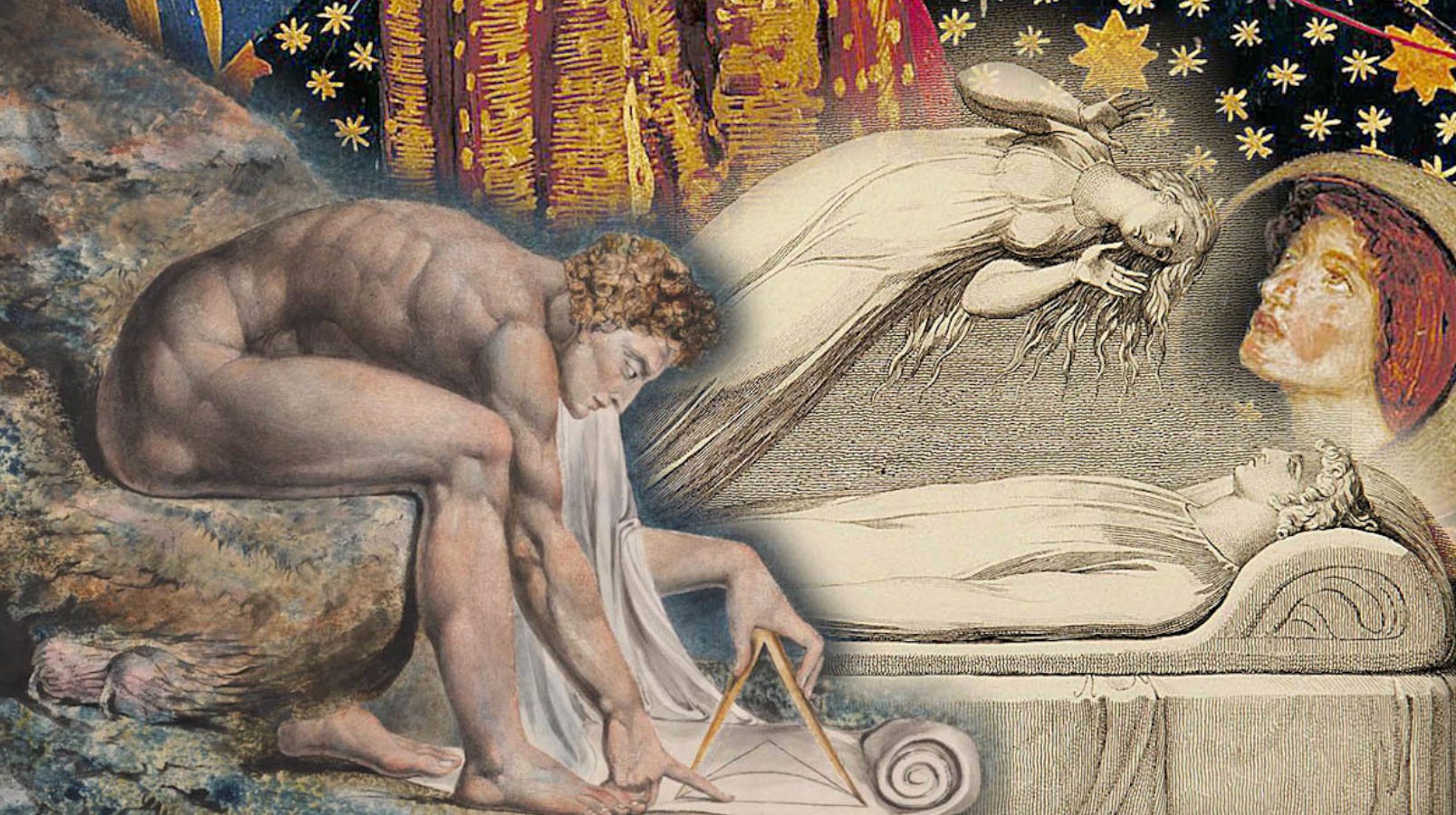
This essay examines the tension between religion, psychoanalysis, and scientific materialism through Lacan, Hegel, Tarkovsky, Blake, and Gnosticism. It argues that religion responds to science by turning disruptive realities back into meaning, while psychoanalysis stays closer to the Real as a symptom that resists domestication. The piece also contrasts contemporary spiritual appeals to finitude with radical materialism’s push toward technical mastery, and uses Tarkovsky’s films to show how heaviness, duration, and earthly materiality can become a path to spiritual experience. The larger frame is apocalyptic: computerization, biotechnology, and virtual reality threaten the familiar boundaries that structure everyday experience.
Psychoanalysis, religion, and the battle over meaning
The essay begins by contrasting hermeneutics, which seeks meaning, with scientific discourse, which addresses a knowledge in the real. It presents religion as a powerful force that can absorb disturbance by giving it sense, while psychoanalysis remains a symptom that refuses this stabilization.
Materialism, spirituality, and the question of finitude
The text argues that contemporary spirituality often defends human finitude and embodiment against radical materialism. By contrast, scientific materialism is described as carrying forward the dream of total technical control, including the biogenetic and biochemical manipulation of life.
Tarkovsky, duration, and spiritual heaviness
Using Tarkovsky as a major example, the essay shows how prolonged cinematic time can reveal beauty and intensity in ordinary physical movement. It emphasizes earth, water, weight, and duration as the medium through which spiritual experience emerges in Tarkovsky’s films.
Apocalypse, computerization, and the collapse of boundaries
The later sections turn toward apocalyptic conditions shaped by ecology, information overload, biotechnology, VR, and cyberspace. These developments threaten distinctions between real and simulated life, reality and illusion, and the stable self and its multiple digital identities.
Key takeaways
- Religion is presented as a system that converts disturbance into meaning.
- Psychoanalysis is framed as remaining close to the Real rather than resolving it into sense.
- Contemporary spirituality is linked to finitude, embodiment, and resistance to mastery.
- Tarkovsky’s cinema uses duration and earthly heaviness to produce a form of spiritual experience.
- Computerization and biotechnology are portrayed as destabilizing basic boundaries of everyday experience.
Source: "FROM GNOSTICISM TO DIVINE KENOSIS" by Slavoj Žižek, published on Substack (https://slavoj.substack.com/p/from-gnosticism-to-divine-kenosis), published 2026-08-08. Read the original post on Substack.