Why Containment Is Not Enough: Žižek on AI, War, and Climate Crisis
In "Why Containment Is Not Enough," Slavoj Žižek argues that the world’s major dangers are increasingly described through the language of containment, whether the issue is war, artificial intelligence, or climate disaster. But he says containment alone cannot solve problems that are already global, interconnected, and capable of escalating beyond human control. The article connects military brinkmanship, the AI arms race, and uncontainable wildfires to a larger critique of capitalism and competition, concluding that what is needed is not just control, but deeper thinking about changing the conditions that produce these threats.
Containment and the language of modern crisis
Žižek notes that media coverage of war, AI, and ecological collapse often focuses on whether these threats can be kept under control. His point is that this framing accepts the dangers as normal and only asks whether they will erupt beyond containment.
War, escalation, and the limits of restraint
Using examples involving Russia, the US, Ukraine, and Iran, he argues that military conflict is treated as a strategy of managed escalation. Yet no one can guarantee that a limited strike will remain limited, especially when nuclear retaliation is possible.
AI and the logic of competition
Žižek turns to AI and questions whether a pause in development can work when states and companies distrust each other. He links the AI race to a prisoner’s dilemma: even if restraint is rational, competitors fear others will secretly keep advancing.
Climate crisis and uncontainable fire
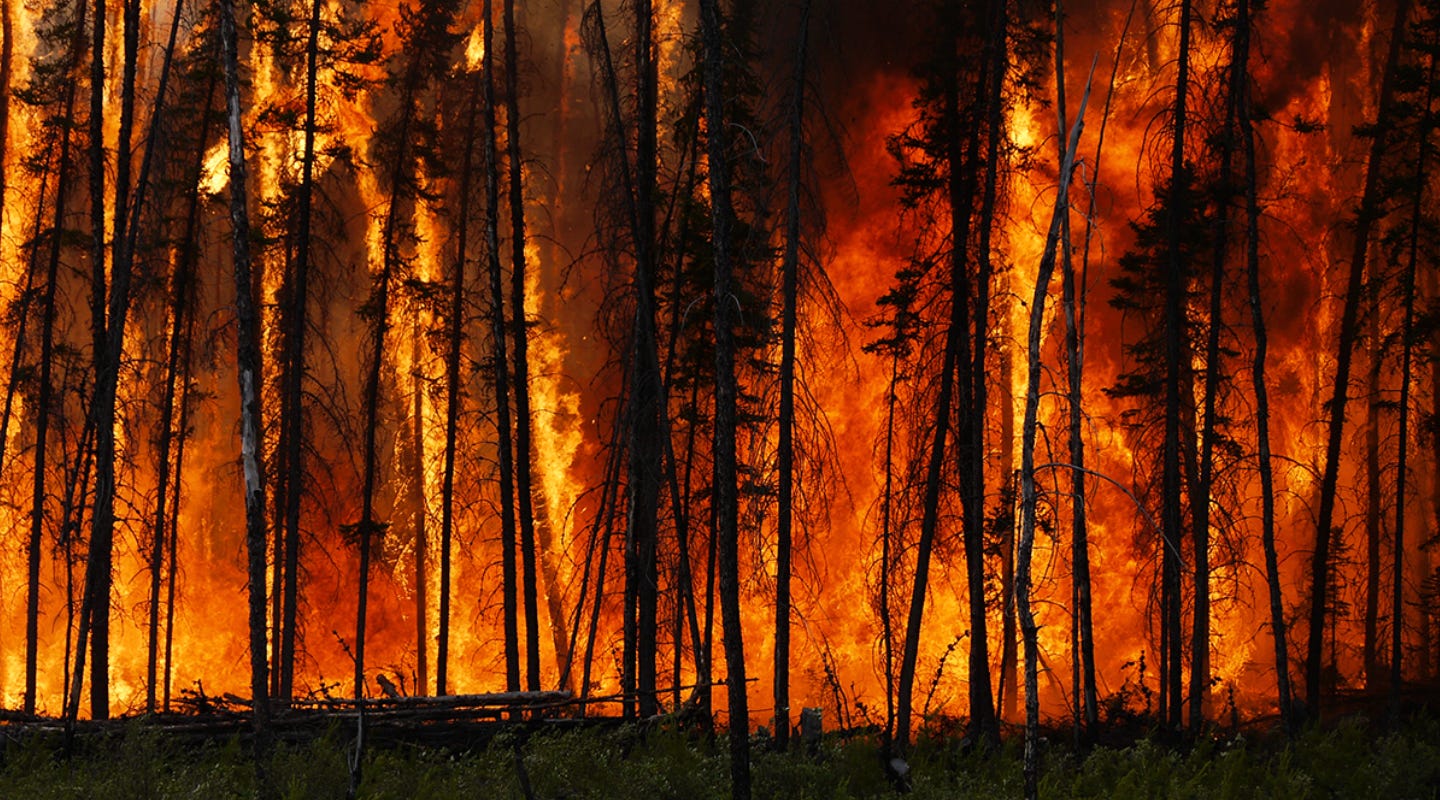
He points to massive wildfires and extreme heat as signs that ecological breakdown is already becoming uncontainable. The article uses firestorms and heat waves to show how environmental damage is moving beyond traditional control measures.
Why thinking must go beyond stopping threats
Žižek concludes that mere containment is not enough. Instead, he calls for thinking that examines the deeper structures producing these crises, especially capitalism and global competition, and for changing those coordinates before catastrophe becomes irreversible.
Key takeaways
- Containment is a limited response to global threats that are already interconnected.
- War, AI, and climate crisis are presented as symptoms of a broader system of competition and distrust.
- A pause in AI development would be ineffective without global coordination.
- Climate disasters are increasingly described as uncontainable and self-feeding.
- Žižek’s core argument is that society must think beyond control and toward structural change.
Source: Slavoj Žižek, "WHY CONTAINMENT IS NOT ENOUGH," published on Substack on 2026-08-26. Read the original at https://slavoj.substack.com/p/why-containment-is-not-enough-2fb Read the original post on Substack.