From Siegfried to Hagen: Re-reading the Nibelungenlied and the Politics of Loyalty
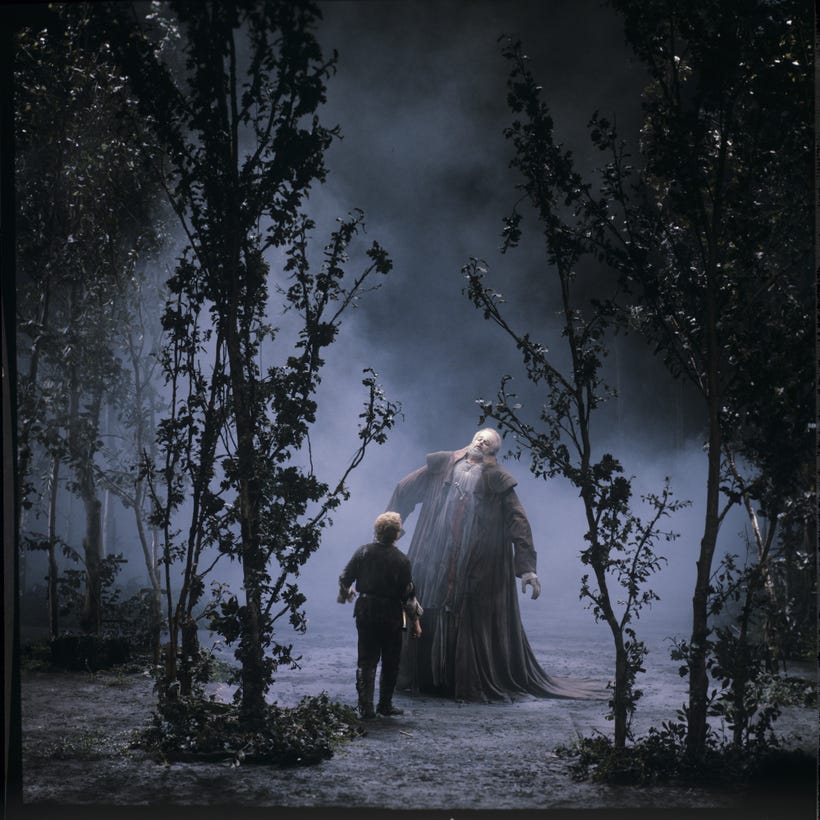
In this essay, Slavoj Žižek returns to the Nibelungenlied to show how changing historical contexts reshape the meaning of old cultural texts. He focuses on Hagen von Tronje, arguing that the poem presents him as a deeply ambiguous figure: brutal and murderous, yet driven by absolute loyalty to his cause. Žižek contrasts this with Richard Wagner’s Ring, where Hagen becomes a clearer villain. He pays special attention to Hagen’s dramatic call to arms, reading its martial form and surprising content as a revealing example of political theater and total mobilization. For Žižek, the figure of Hagen prefigures a kind of fascist populism that would only become fully visible much later.
Why return to the Nibelungenlied now?
Žižek argues that older cultural works can help illuminate present political questions, especially when their reception changes over time. He uses the medieval Nibelungenlied as a starting point to examine how resistance, power, and loyalty are imagined across history.
The story and Hagen’s role
The essay briefly retells the epic: Siegfried arrives at Worms, marries Kriemhild, and is later murdered by Hagen with Gunther’s involvement. In the second part, Kriemhild marries Etzel and plots revenge, leading to a catastrophic bloodbath. Žižek emphasizes that Hagen is more than a vassal; he is Gunther’s fiercely devoted adviser and a ruthless defender of his idea of honor.
Ambiguity versus pure villainy
Žižek’s central claim is that Hagen is profoundly ambiguous in the original poem and in Fritz Lang’s 1924 film. Hagen commits atrocities, but he does so in the name of unconditional fidelity to a cause. He is not cowardly; he remains battle-ready even when defeat is inevitable.
Wagner’s Hagen and the politics of mobilization
Žižek notes that Richard Wagner’s Ring is an early turning point in portraying Hagen as thoroughly evil. He then analyzes Hagen’s call to arms, where the aggressive public form of a military summons is paired with a seemingly trivial task of preparing animals for a wedding sacrifice. Žižek reads this mismatch as politically revealing: the rhetoric of emergency and mobilization masks a deeper plan and signals a populist, totalizing logic.
Key takeaways
- Žižek uses the Nibelungenlied to show how historical texts gain new political meanings over time.
- Hagen is presented as an ambiguous loyalist in the original epic, not simply a villain.
- Wagner’s version helps shift Hagen toward outright evil.
- Hagen’s call to arms is read as a model of theatrical, total mobilization.
- Žižek links this style of politics to a later fascist-populist logic.
Source: Slavoj Žižek, “FROM SIEGFRIED TO HAGEN,” https://slavoj.substack.com/p/from-siegfried-to-hagen (published 2026-09-12). Read the original post on Substack.