Hegel, Reconciliation, and the Paradox of History: Žižek’s Rome Lecture Summary
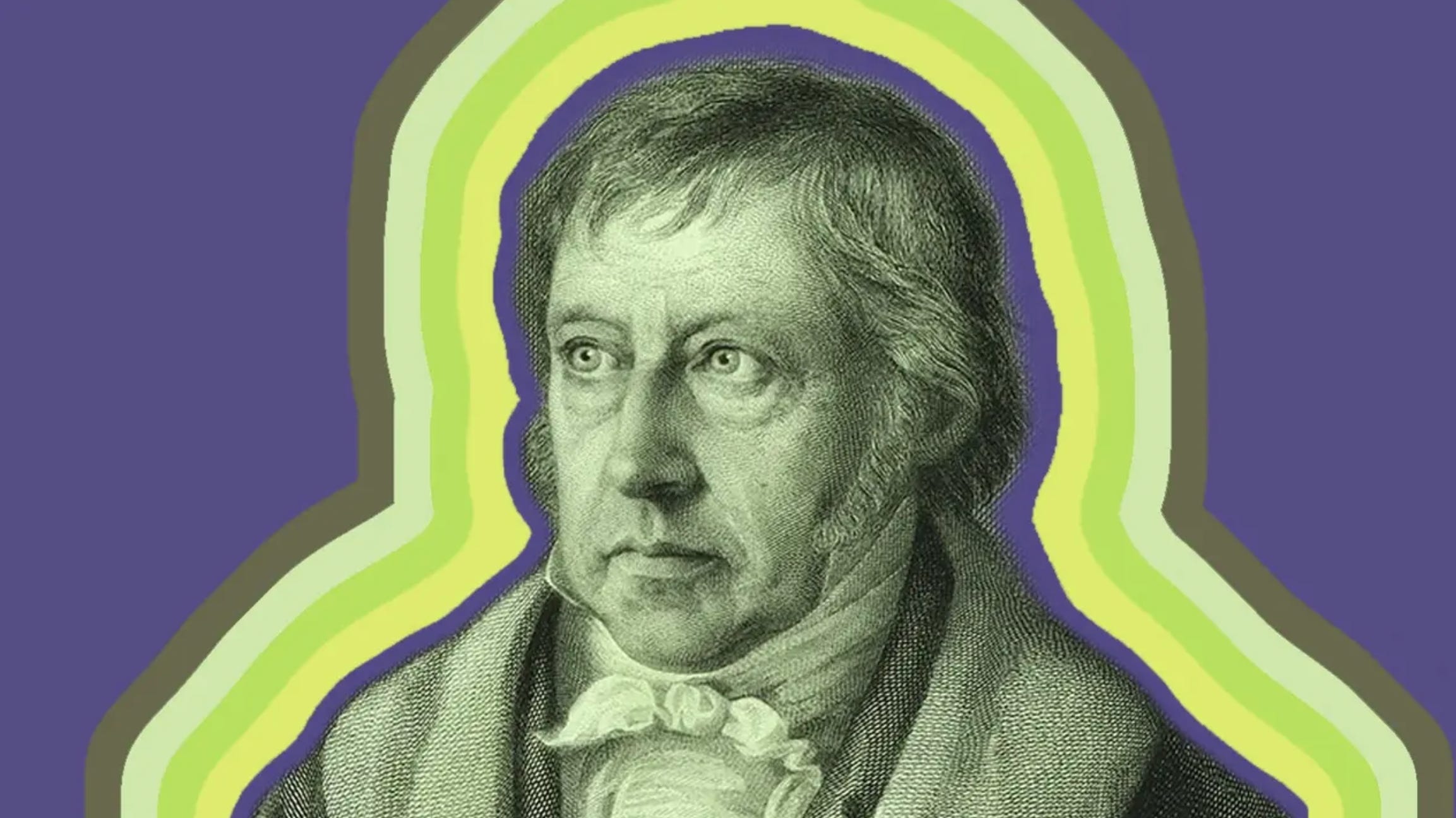
In this speech delivered at a Hegel congress in Rome, Slavoj Žižek argues that there is no neutral way to read Hegel: every return to Hegel is shaped by later traditions and interpretations. He suggests that these competing readings reveal contradictions already present in Hegel’s own texts, and he uses a Lacanian lens to propose that Hegel’s Absolute Knowing points to the radical openness of history rather than a closed idealist system. The lecture moves through Hegel’s ideas on distress, the rational state, reconciliation, and historical progress, arguing that Hegel’s thought is better understood through contingency, reversal, and the post factum meaning of events than through a simple doctrine of harmony.
No neutral Hegel
Žižek begins by saying that Hegel can only be approached through later interpretive traditions. He treats the many “returns to Hegel” as revealing tensions and inconsistencies within Hegel’s own work rather than merely distorting an original pure meaning.
Reading Hegel through Lacan
He frames his approach as reading Hegel through Lacan, claiming that Hegel’s Absolute Knowing can be understood as the openness of history to contingency. At the same time, he insists that Hegel’s own formulations should still be read closely and literally.
Distress, poverty, and the state
Žižek points to Hegel’s remarks on the “right of distress” and poverty as examples that may have broader implications than Hegel explicitly states. He also revisits the Philosophy of Right, asking how its account of the rational state fits with Hegel’s claim that philosophy comes too late to prescribe how the world should be changed.
Reconciliation as a shift of perspective
A central argument of the lecture is that Hegelian reconciliation is not the smoothing over of trauma but a change in perspective in which what seemed absent or incomplete is recognized as already present. Žižek links this to Hegel’s account of wounds, Spirit, and the role of finite activity in sustaining what appears eternal.
History, reversals, and political endings
Žižek emphasizes that historical projects often turn into their opposites: revolutions can lead to terror, progress can end in catastrophe, and emancipatory projects can produce new forms of domination. He presents this as a deeply Hegelian lesson about how future outcomes cannot be known in advance and are only intelligible after the fact.
Suspicion toward easy progress
The lecture also pushes back against optimistic readings of Hegel as a simple theorist of progress. Žižek argues for a more distrustful Hegel, one who teaches that freedom is inseparable from risk, failure, and the possibility that every well-meant idea may turn wrong.
Key takeaways
- Žižek argues that Hegel must be read through later interpretations, not as a fixed original.
- Hegelian reconciliation is presented as a shift in perspective, not a denial of conflict.
- History is open and uncertain; its meaning becomes clear only after events unfold.
- Political and social projects often reverse into outcomes opposite to their intentions.
- The lecture stresses contingency, contradiction, and distrust as central to a Hegelian view of modernity.
Summary based on Slavoj Žižek’s Substack post “EVERYTHING YOU WANTED TO KNOW ABOUT HEGEL BUT WERE AFRAID TO ASK HEGEL” (speech delivered at a Hegel congress in Rome on September 1st). Source: https://slavoj.substack.com/p/everything-you-wanted-to-know-about-e10 Read the original post on Substack.