Against Poetocracy: D’Annunzio, Fiume, and the Politics of Aesthetic Power
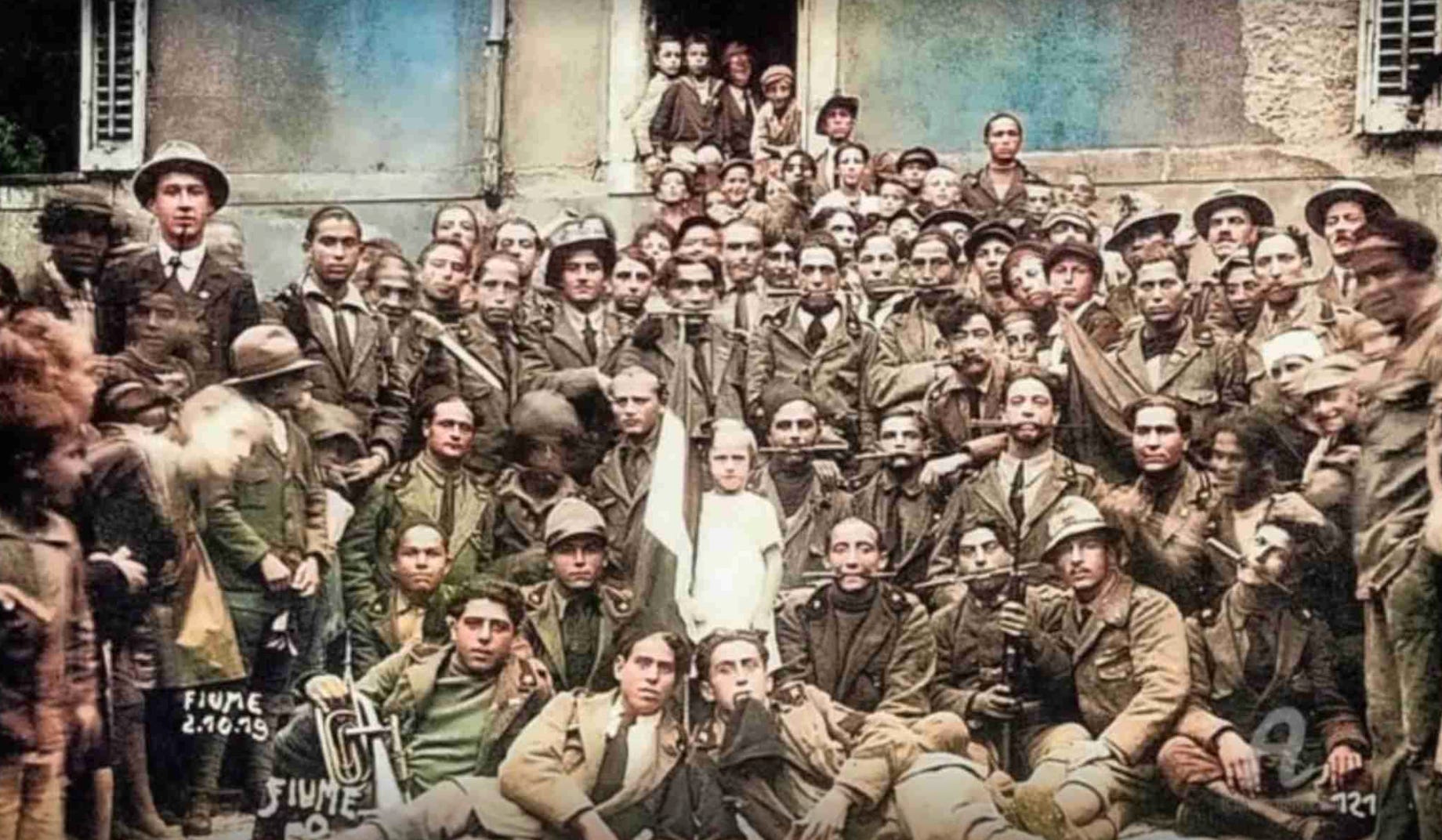
This piece reflects on Igor Bezinović’s documentary Fiume o Morte and the extraordinary political experiment of Gabriele D’Annunzio’s occupation of Fiume in 1919. It presents Fiume as a brief but intense historical moment in which artistic performance, radical politics, and anti-establishment energies converged. The article emphasizes D’Annunzio’s larger-than-life persona, his influence on Italian culture, and the complicated legacy of his experiment, which attracted an unusual mix of rebels and political currents while later being shadowed by fascist appropriation.
The documentary and the historical moment
The article highlights Igor Bezinović’s Fiume o Morte as a film that captures the strange atmosphere of the Free State of Fiume and the political theater surrounding D’Annunzio’s rule.
D’Annunzio as poet, performer, and political figure
D’Annunzio is presented as more than a poet: a novelist, playwright, war hero, aviator, advertiser, and public provocateur whose creativity made him a major cultural celebrity.
A radical and contradictory experiment
Fiume is described as a politically unusual space that drew in fascists, syndicalists, anarchists, and communists, while D’Annunzio imagined it as a site for anti-capitalist and anti-imperialist action.
Legacy and shadow
The piece notes that although fascism later borrowed from D’Annunzio’s aesthetics, his project cannot simply be reduced to fascism, since it also contained anarchic and utopian elements.
Key takeaways
- Fiume was a short-lived but highly unusual political experiment after World War I.
- D’Annunzio combined literary fame with performance, military glory, and radical politics.
- The project attracted a broad mix of anti-establishment movements.
- Later fascist aesthetics borrowed from D’Annunzio, complicating his legacy.
- Bezinović’s documentary is presented as a vivid retelling of this historical episode.
Source: Slavoj Žižek, “AGAINST POETOCRACY,” published on Substack: https://slavoj.substack.com/p/against-poetocracy Read the original post on Substack.