Solutions, But How Do We Get There? A Reflection on Apocalypse, Ideology, and AI Control
In this essay, Slavoj Žižek contrasts urgent global problems with the lack of serious institutional responses. Using a mix of striking examples, he argues that apocalypse is often imagined as a sudden catastrophe, while in reality many crises unfold gradually through everyday breakdowns. He also suggests that ideology often works most effectively when people deny they are being ideological. The piece closes by noting that although even tech leaders now call for global AI oversight, there is still no serious framework for who should build it or who would be legally responsible when things go wrong.
From lunar survival to earthly survival
Žižek opens by pointing to NASA’s plans for human life on the Moon and contrasts them with the far more urgent need for a plan to sustain human life on Earth. The point is not to dismiss space exploration, but to highlight how badly current priorities are aligned.
Everyday ideology and absurd reactions
He then uses a reported failed execution and a casual overheard comment to show how ideology can surface in ordinary speech. His point is that ideology often works best when it is disavowed or treated as a joke, rather than openly defended.
Apocalypse as a slow process, not a sudden event
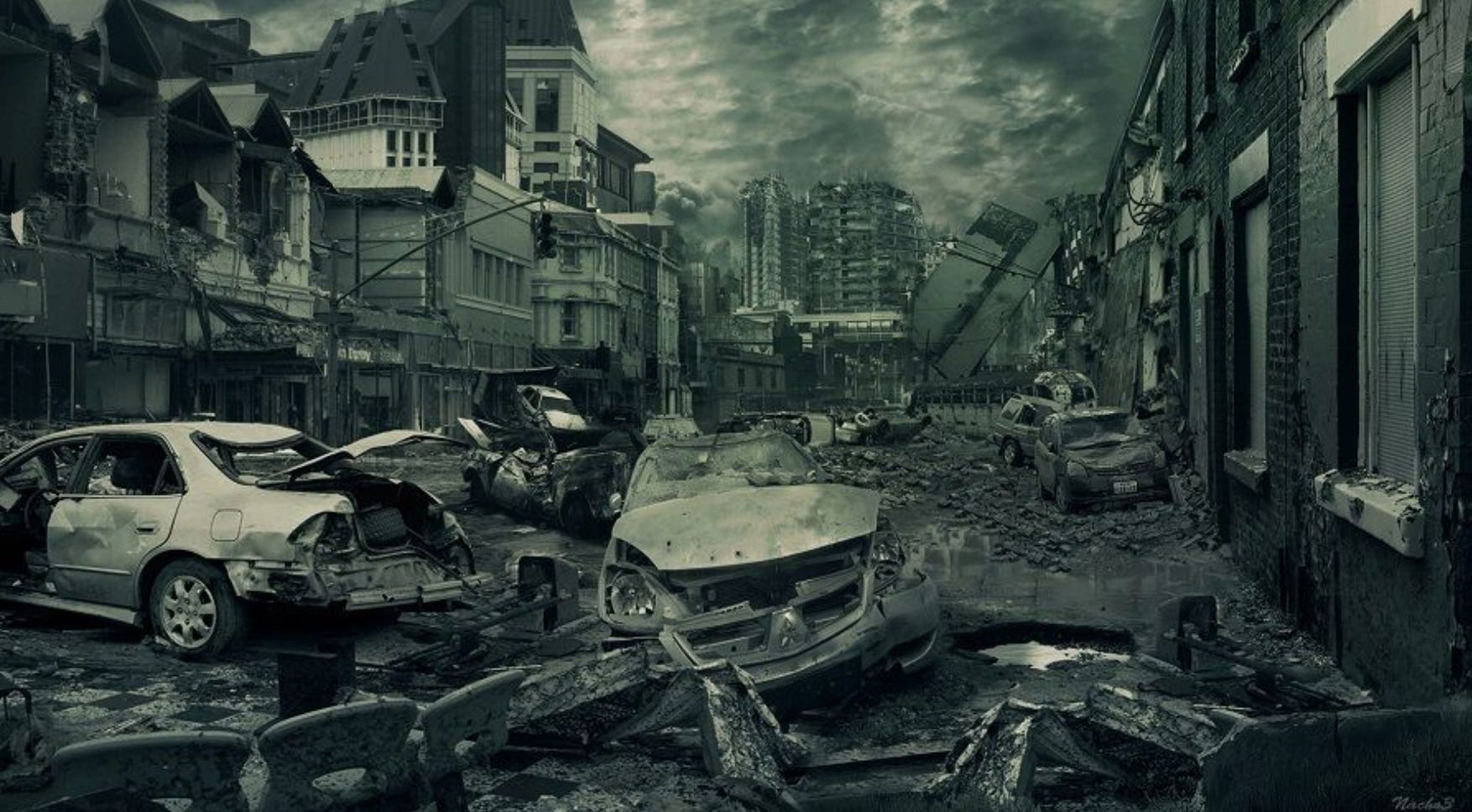
The essay argues that apocalyptic scenarios are usually imagined as dramatic ruptures, but climate collapse and social decline may instead arrive gradually. Žižek describes this as a slow erosion of normal life, with examples such as flooding, shortages, instability, and the weakening of social civility.
AI control without institutions
Žižek ends by noting the contradiction between growing demands for global AI regulation and the absence of any institution capable of enforcing it. He also raises the issue of legal responsibility, asking who would be held accountable if AI causes serious harm.
Key takeaways
- Žižek frames today’s crises as a mismatch between urgent danger and weak institutional response.
- He argues that ideology often operates most effectively when people think they are only joking or being practical.
- The essay treats apocalypse less as a single event and more as a gradual collapse of everyday life.
- AI governance is presented as a global need with no serious legal or institutional framework yet in place.
Source: Slavoj Žižek, “SOLUTIONS – YES, BUT HOW DO WE GET THERE?” (Substack), https://slavoj.substack.com/p/solutions-yes-but-how-do-we-get-there, published 2026-10-17. Read the original post on Substack.